Paris is often remembered for art, nightlife, and visible luxury. La Belle Époque Paris nightlife culture shaped what people wore, where they went, and who they were seen with. It also ran on strict social codes that decided who could be visible, who was judged, and what had to stay private. Courtesans became prominent in the space between respectable society and the demi-monde, where reputation functioned as currency and attention could be converted into influence. In a city that watched itself constantly, being noticed could open doors, but it could also close them.
Opera, cafés, and theatre culture created public stages where image and association mattered, while regulation and surveillance drew hard lines around morality and public order. Behind the glamour sat practical economics, including housing, gifts, and patronage, with discretion protecting both status and privacy. The same dynamics still echo in modern life, where identity, desire, and social standing are often negotiated through visibility and controlled boundaries.
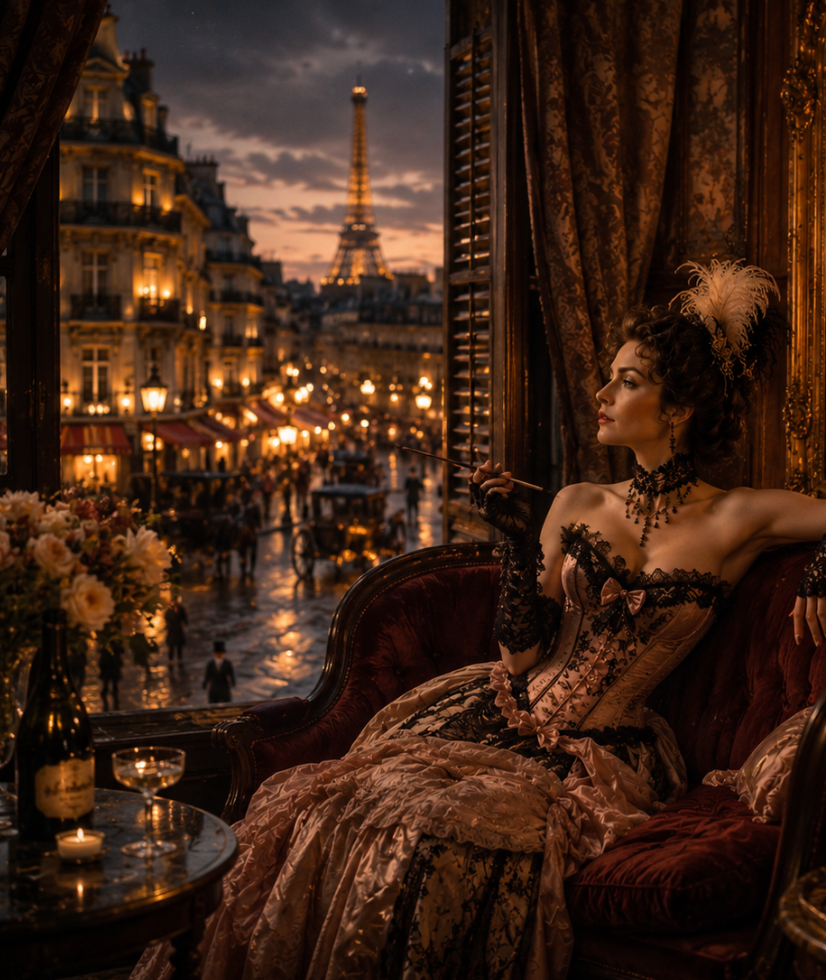
Why La Belle Époque Made Courtesans So Visible
La Belle Époque ran from the late nineteenth century through to 1914, and Paris became a public theatre of art, nightlife, and visible luxury. It was also a period with strict social codes, so status depended on what could be shown and what had to be hidden. That tension created space for figures who could move between worlds, visible enough to be admired, but careful enough to avoid being destroyed by gossip.
In that environment, the history of courtesans in Paris sits inside a contradiction. Courtesans were not simply private companions. They were public signals of taste, wealth, and access, and their visibility fed the era’s fascination with glamour, transgression, and the thrill of what looked almost respectable.
The Social Stage: La Belle Époque Paris Nightlife Culture
Paris offered venues where class boundaries could blur without disappearing. The opera, theatre, cafés, and exhibition culture created meeting points where La Belle Époque Paris nightlife culture played out in front of everyone, and people watched each other as much as they watched performances. Reputation travelled through these spaces, and visibility could be converted into influence. A glance, an introduction, a table placement, even who lingered with whom could become its own kind of announcement.
In these settings, Paris courtesans understood that the city rewarded those who could manage attention. A night out was never only leisure. It was a social transaction, shaped by who arrived, who was seen, and who was spoken about afterwards. Sophistication was performed in public, then judged in private.
The Demi-monde And Its Rules: Respectability Versus Scandal
The demi-monde was defined by proximity to respectable society, not by full acceptance by it. Courtesans could be celebrated, imitated, and condemned simultaneously. The rules were rarely written down, but they were widely understood. A person could be visible without being welcomed, and admired without being protected. That imbalance is part of what made the demi-monde both alluring and dangerous.
For many, discreet patronage offered a way to participate in status while limiting exposure. The demi-monde relied on selective privacy, careful introductions, and controlled narratives. Scandal was always possible, but it was not always accidental. Sometimes it was a weapon, sometimes a warning, and sometimes the price of being seen.
Policing Morality: Regulation, Surveillance, And Public Health
Paris also had a well-known system of regulation around prostitution, including maisons closes (licensed brothels). The system shaped public attitudes by drawing lines between what was tolerated, what was hidden, and what was punished. It also created a language of surveillance, in which bodies and behaviour were treated as matters of public order rather than personal choice.
This environment affected courtesans even when they operated outside formal structures. Regulation influenced how people talked about risk, respectability, and legitimacy. It reinforced the idea that certain forms of intimacy were acceptable only when they stayed out of sight, even as the city profited from nightlife and the spectacle of glamour.
How Paris Courtesans Built Reputation and Influence
Reputation in Belle Époque Paris was currency. Courtesans built it through appearance, association, and a careful sense of timing. They cultivated connections to wealthy patrons, artists, and influential circles, while maintaining an image that suggested both availability and distance. Too accessible and the mystique collapsed. Too remote and the attention moved on.
Paris courtesans were also described with labels such as demimondaines, cocottes, and grandes horizontales, each with its own social meaning. These terms reflected a culture that categorised women by visibility and perceived access. Influence came from being talked about, but it also came from controlling what was never confirmed.
Money, Gifts, And The Cost Of Glamour
Glamour had an operating cost. Housing, clothing, jewellery, and constant presentation required funding, and that funding was often tied to patronage. The economics of the era made luxury a performance that needed ongoing investment, not a one-off purchase. Courtesans were expected to look effortless while managing the reality behind the image, including the risks that came with dependence.
In practice, Paris luxury companionship became part of the display of wealth. Gifts were not only about generosity. They were signals of rank and access, shaping who could remain visible in the city’s most competitive social spaces. The glamour was real, but it was never free and rarely safe.
Discreet Patronage And The Private Economy Behind Public Beauty
Behind the public image sat a private economy built on introductions, trust, and boundaries. Discreet patronage was not only about secrecy. It was about control, including who had access, what was exchanged, and how relationships were framed in public. Privacy protected reputations on both sides, especially in a society that judged women more harshly and forgave men more easily.
This private economy also shaped the myth of the courtesan. It encouraged stories that blurred fact and fantasy, because distance creates projection. When details are hidden, people fill gaps with assumptions, and the figure becomes an archetype rather than a person with practical constraints, choices, and limits.
The History of Courtesans in Paris And The Business Of Attention
The history of courtesans in Paris is often remembered through art, literature, and later retellings that romanticise the era. In those versions, La Belle Époque Paris nightlife culture becomes a glittering backdrop. That cultural memory can turn courtesans into symbols of freedom or decadence, depending on the storyteller. The reality was more complicated, shaped by social rules and unequal consequences. Beauty could open doors, but it could also trap.
Within that attention economy, Paris luxury companionship became part of how fascination was created and maintained. Visibility could create demand, but it also created risk. The same public interest that elevated courtesans could be used to shame them. Attention was valuable, but it was never neutral, and it rarely belonged fully to the woman being watched.
From Belle Époque To Modern Life: Paris Luxury Companionship and Modern Discretion
Modern life still rewards image, access, and the ability to manage attention. The terms have changed, and the venues look different, but the underlying dynamics remain familiar. People still navigate the tension between public identity and private desire, especially in cultures that treat intimacy as a marker of status. The pressure to look effortless has not disappeared; it has simply moved platforms.
In that sense, Paris luxury companionship and discreet patronage remain useful concepts for understanding how discretion works today. Privacy is not only about hiding. It is about choosing what is shared, with whom, and on what terms. When we look back at Belle Époque Paris, we can see how old narratives continue to shape modern expectations.
La Belle Époque Paris is often remembered as glittering and carefree, but it was structured by rules about visibility and respectability. Courtesans became prominent because they could operate in the space between admiration and judgement. Looking closely shows a world where glamour had costs, discretion had value, and reputation shaped everything.
Explore more at Private Girls and discover modern intimacy with confidence, privacy, and respect.